Mechanical Seals

SealSales.com carry high quality market seals to suit all types and Gaskets Materials, like PTFE, Single Spring Seals, Bellows Seals,Stationary Seats,Cartridge Seals,Gauge Glass,O-Rings,PTFE and many more.

Gaskets Materials

we Cut Gaskets from a full range of materials. You can view the specifications on many of the common gasket materials

American Seal and Packing

Mechanical Seals and Gasket Supply is our Specialty. American Seal and Packing is a leading manufacturer and distributor of mechanical seals, Grafoil, gasket material, cut gaskets and quality o-rings providing innovative solutions to mechanical seal problems.

Mechanical Seals Repair Service

SealSales offers you exceptional quality and pricing on industrial mechanical seals including: Pump packing, gaskets, Viton, o-rings, etc..

Wednesday, 29 November 2017

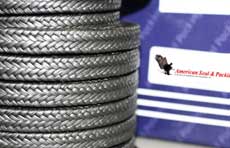
Braided Packing

We have prepared this braided compression packing catalog as a guide to selecting the right material for the job.  Because every application is different, and the variations in those applications are far ranging, we must advise this is to be only used as a guide.


WARRANTY DISCLAIMER
 
This product catalog and all of the information it contains are provided as is without warranty of any kind, whether express or implied. Information is being supplied only as of the date entered. It may contain generalizations, technical inaccuracies, or typographical errors. Updates and corrections may be made from time to time without notice. Each of the American Seal & Packing family of companies disclaims all implied warranties, including, without limitation the implied warranties of merchantability, fitness for a particular purpose, and non-infringement.

LIMITATION OF LIABILITIES
 
Under no circumstances will any of the American Seal & Packing or Steadman & Associates, Inc. family of companies be liable to any party for any direct, indirect, special, incidental, consequential, or other damages based on any use of this product catalog or any other product catalog to which this site is linked, including, without limitation, any lost profits, business interruption, or loss of programs or information, even if any such company has been specifically advised of the possibility of such
damages.


NO RIGHTS OR LICENSE 
 
Information provided herein is for the convenience of our product catalog visitors, and is not being published for commercial use. No rights are granted to users in any of the American Seal & Packing family of companies trademarks, copyrights or other intellectual property or technical data. Use of the American Seal & Packing Sealing  product catalogs or any information is at the sole risk of the user.

Braided Packing - https://www.sealsales.com/packing/what-is-braided-packing.html

Buy O-Rings

O-Rings are circular sealing element with circular cross section, are mainly used in static applications. It is provided by American seals and packing company.
These product sizes are specified by the inside diameter and the cross sectional diameter. These products available in our stock overnight and standard shipping. We will give you good price on our website.


O-Rings - https://www.sealsales.com/o-rings/O-Rings.html

Thursday, 24 March 2016

What is Metric Compact Piston Seals?

Style ERKO Double-acting three piece piston seal. 80 Durometer Nitrile with fabric reinforced Nitrile and Nylon guide rings. The sealing action is effected by the fabric reinforced Nitrile member at the dynamic side. Lubricants such as oil and grease are able to penetrate the fabric and allow the seal to be highly wear resistant. Can easily be to one piece pistons.

Style EZE Double-acting three piece piston seal. 80 Durometer Nitrile with fabric reinforced Nitrile and Nylon guide rings. Consists of a solid rubber element that is reinforced with fabric on both sides. This gives the seal excellent resistance to pressure surges.

Style EZM Double-acting five piece piston seal. 80 Durometer Nitrile with Hytrel back-up rings and Nylon guide rings. Consists of a Nitrile rubber sealing element that effects both static and dynamic sealing. The back-up rings and the guide rings are of the split type. The low profile of the guide rings provides simple installation. Not suitable for retaining applications.

Style EZW Double-acting three piece piston seal. 80 Durometer Nitrile with fabric reinforced Nitrile and Nylon guide rings. Heavy duty seal for multi-piece pistons. The robust profile and the sturdy right angle of the back-up/support rings give the seal high resistance to peak pressures and pressure surges. Rated to 7500 psi.

Style L43 Double-acting five piece piston seal. 80 Durometer Nitrile with Hytrel back-up rings and Nylon guide rings. The hardness of the materials used in the construction of each component of the seal increases from the inside component to the outside component. As a result, the performance of each individual component is optimized in performing the individual functions of sealing, bridging the gap, and guidance within the cylinder tube.

What is Piston Seals?

Two-part seal requiring no lubrication. Piston design is simplified; and sticking, slipping, and breakaway problems are eliminated. Damage associated with cast iron or phenolic piston ring particles is eliminated as well as cylinder wall scoring. Provides bi-directional sealing. Easy installation and removal, and can be cut in the field for easier installation. Inference fit assures positive sealing. Conforms to out-of-round bore conditions. Pressures to 5000 psi. ASP provides piston seals with 70 Durometer Nitrile Expanders. Other compounds are available by special order.

Square Piston Seals Style TPR1400

 Square profile 15% glass filled PTFE with 70 Durometer Nitrile O-Ring (Expander)

Rectangular Piston Seal Style TPR1800

Rectangular profile 15% glass filled PTFE with 70 Durometer Square Cut Ring

Piston Seals


Piston Seal Installation Data 

1. Clean piston in solvent and dry. Inspect groove and end of piston for nicks or burrs which could damage the expander/piston ring.

2. Lubricate expander with a compatible lubricant for easier installation. Caution: Be sure expander is not twisted or distorted in groove.

3. Install the piston ring over a 10° included angle mandrel onto the piston body and into the groove in a single motion as quickly as possible. Do not use pry bars, screwdrivers, knife blades, or any metal object to install piston rings this will damage piston and seal.

4. After installation of the piston ring, carefully guide the piston into the chamfered cylinder bore carefully (check bore first for burrs, sharp edges and foreign material). If bore is not chamfered, use a smooth, lubricated and tapered piston ring compressor to facilitate installation.

5. To remove a worn piston ring, carefully cut through the PTFE piston ring and remove. Do not cut into the expander unless it is to be replaced also. Use care not to damage groove walls and create burrs or sharp edges.
All Types of Mechanical Seals & Gaskets Buy Online / Free Order Quote from AS&P

Saturday, 6 February 2016

Pump Shaft Seals

Pump shaft seals are actually mechanical seals which are used prevalently in pumps to solve a problem that persists in almost every industrial environment. When transferring liquids from one end of the factory to another, there are so many joints that it has to pass through. Leakage becomes an extremely persistent problem which is brought under control with the help of such powerful seals. However harsh the working conditions are, the devices are capable of withstanding such pressure and there are multiple types of products available designed to suit specific requirement. As time developed, newer and more advanced variants came into being.

Stuffing box seals isthe most primitive variant of the product and it is still being used in industries where they may not require any advanced devices. It is cheap, easy to use and is versatile enough to match many applications. One of the biggest weaknesses of the packing style is that because of being cheap and easy to create, it doesn’t last long. Industrial applications which require robust build and long lasting capability may have to skip this method of sealing.

Pump Shaft Seals
The lip seals came into being which is a much better variant of pump shaft seals. For better durability and finish, the product is made using a rubber ring on the inside to keep the pressure levels intact. Based on the pressure the application requires, the thickness of the ring would vary. While rubber is the most preferred material to construct it, it is also built using polymer materials at times. Powered by a tight construction and limited space, this type of seal is more than capable of withstanding high pressure. The rubber material however will not stand against increased temperature conditions as it will easily melt.

The above mentioned models of pump shaft seals are used in industries where they can withstand only one type of liquid. If it has increased pressure, higher temperatures and corrosive in nature, such type of seals could never be used. It is in such a scenario that the stepped shaft metal components are used. Metal can easily overcome the corrosive nature of any liquid and it can also withstand increased temperatures without breaking a sweat. With such convenience and amazing robustness besides long lasting durability, they are obviously the most preferred models. They are often used in almost every industrial setup irrespective of the transfusion done.

While pump shaft seals are capable of transferring any type of liquid from one end to another, there could be leakage in the connecting edges. It is overcome by using o rings. They are made using rubber materials but when it comes to high temperature and pressure based liquids, they are made using different components that are capable of handling the demanding conditions.

It is important to buy the components from a reliable seller. It is supposed to help an industrial process run without any hiccups. Branded solutions are often preferred and online shopping has made it easier to find the right type of seal.

Tuesday, 17 November 2015

Material Selection

Its very difficult to choose the right gasket for the job these days, there are just so many styles. There are many different packings with similar properties and prices. And with the ban on asbestos-based materials, there are many more styles being made to replace them. The four basic things you have to keep in mind when selecting a material are as follows: • Operating Pressure

• Bolt Load

• Resistance to chemical attack (Corrosion)

• Operating temperature

The corrosion resistance can vary based on a couple different factors: • The concentration of the corrosive agent: Higher concentrations dont always mean the fluid will be more corrosive.

• The temperature of the corrosive agent: Higher temperatures tend to speed the effects of corrosion.

• Dew Point: When the fluid moves through the dew point when in the presence of sulfer and water can result in the formation of highly corrosive condensates. The formation of sulfer and water are commonly found in gases resulting from combustion. In critical applications it is common practice to test materials in a lab to determine their chemical resistance to corrosive media under service conditions. In order to design a gasket, an evaluation is required, starting with the type of flange, bolt load, setting stress, etc. Attention to detail is key in this process and every step must be followed in order to get maximum use out of your material. Gasket selection can be simplified by using the Pressure x Temperature Factor.

Styles of PTFE

Molded and Sintered PTFE: This type of PTFE was the first to be introduced to the market. This style is made from virgin or reprocessed PTFE resin, without fillers, which is then molded, compressed and sintered. As with any other type of plastic, PTFE has a high creep factor when compressed. The creep factor is detrimental and can lead to having to re-tighten the bolts to maintain seating pressure and prevent leakage. The higher the temperature in the application it is used for, the more the creep factor will increase. Even with these drawbacks, PTFE is affordable, easily available and highly chemical resistant.

Skived PTFE: This style is similar to molded and sintered PTFE as it is also make of virgin or reprocessed PTFE without fillers. Instead of molding an individual sheet, the sheets are taken from a billet of PTFE with a process called skiving. The skiving process was developed to overcome manufacturing deficiencies of the molding process. Skived PTFE shares the same creep characteristics as molded and sintered PTFE.

Molded or Skived Filled PTFE: In order to correct the creep characteristics of molded and skived PTFE, manufacturers started adding mineral fillers or fibers in order to reduce creep factor. This indeed reduced the creep characteristics but not by a significant amount.

Restructured Filled PTFE: Besause the addition of fillers in the molding process was not enough to significantly reduce creep, a new manufacturing process was developed to produce filled PTFE sheets. In this new process the material is laminated before being sintered, which yeilds a highly fibrillated structure with significantly less creep. The different fillers used in this process are as follow: • Barite: Added for use in strong caustic service. Also FDA compliant.

• Mineral Silica: Used for strong acidic service.

• Hollow Glass Microshperes: Used to increase compressibility.

• Synthetic Silica: Used as subsitute for glass microspheres.

Expanded PTFE: This style of PTFE is made by heating and stretching PTFE before sintering it. Lke all PTFE it has strong chemical resistance, but unlike molded or skived PTFE, this material has a high compressibility and is good for use in flanges made from fragile materials. The only drawback to this material is that its floppy and difficult to install, especially if the flanges cannot be separated.